
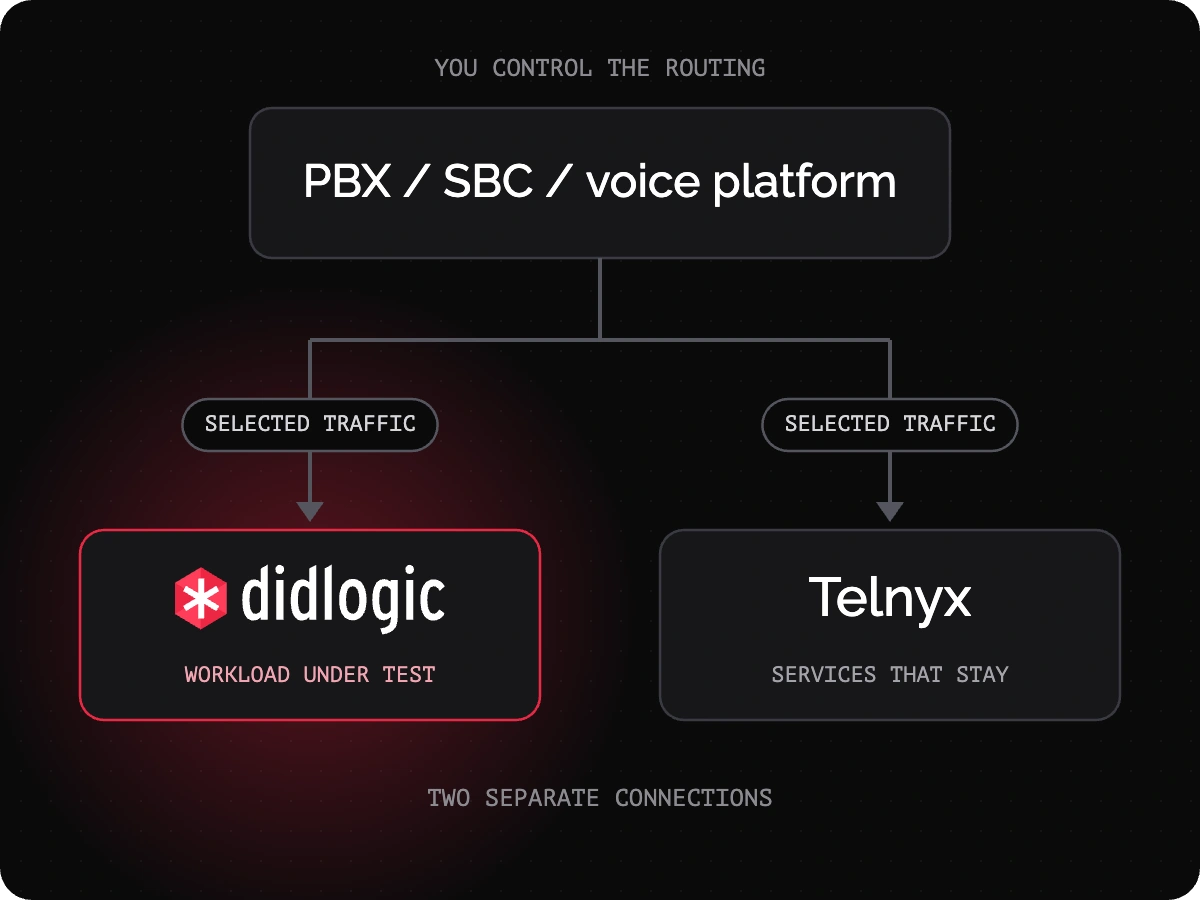
Your own PBX, SBC, or platform decides which calls go where. Keep Telnyx for what it already does well and route one defined workload to didlogic.
Pattern A: separate workloads
Your business applications keep a selected existing communications or platform workload on Telnyx, while a selected SIP voice workload runs on didlogic.
Pattern B: customer-managed carrier choice
Your PBX, SBC, or voice platform sends selected traffic to didlogic and selected traffic to Telnyx, using routing rules you control.
You decide which workload goes where. Two providers do not by themselves mean separate failure domains or guaranteed redundancy; that depends on how each route is built.