












SMS API for business messaging

Send and manage SMS directly from your software with the didlogic REST API, with inbound messages relayed to your endpoint via webhooks on supported SMS-enabled numbers.
Trusted by

Send, retrieve and track SMS

Send SMS
Send SMS

Submit an outbound SMS with a POST /api/v1/sms request. The documented REST endpoint uses Bearer token authentication.

List sent messages
List sent messages

Retrieve a paginated list of SMS messages sent from your account with GET /api/v1/sms.

Check message details

Use GET /api/v1/sms/:id to retrieve information about a specific message, including status, source and destination, timestamps, cost and segment count.

Receive inbound SMS
Receive inbound SMS

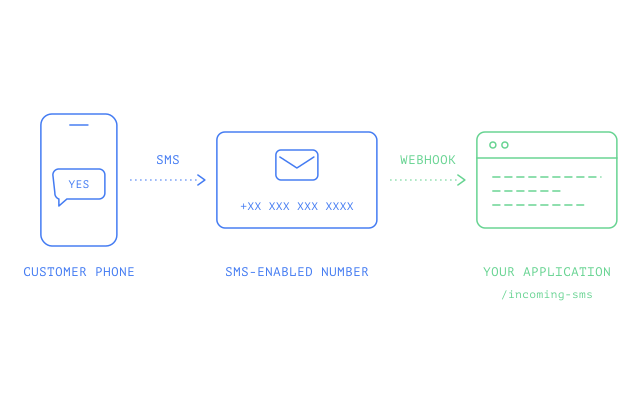
Incoming messages to supported SMS-enabled numbers can be relayed to your endpoint through a configured webhook.

HOW IT WORKS

From your application to SMS

Connect SMS to your existing application without changing how you manage your users or workflows. Confirm the right setup for your traffic, integrate with the didlogic REST API, and send and manage messages directly from your software.
  1. Step 1

    Confirm your setup

    Tell us where you need to send, what type of messages you’re sending and your expected volume. Requirements vary by destination and traffic type.

  2. Step 2

    Connect the API

    Create your integration using the documented SMS endpoints and authenticate requests with your API token.

  3. Step 3

    Send from your application

    Your software submits SMS requests through the API. You can then retrieve sent messages and check the available details for individual messages.

USE CASES

Where the SMS API fits

OTP and verification

Trigger one-time codes, login verification and account-recovery messages from your application where supported.

Transactional messaging

Send order updates, appointment reminders, service notifications and account alerts when an event occurs in your system.

Contact centers and customer platforms

Add SMS to an existing communications platform, CRM or contact-center workflow alongside voice.

Messaging and telecom platforms

Add SMS connectivity to a communications product without building the underlying telecom relationships yourself.

High-volume sending

Use your own application to manage recipients and sending logic, then submit messages through the API.

INBOUND SMS

Receiving SMS? Use a webhook

Inbound SMS works differently from outbound API sending.

With a supported SMS-enabled didlogic number, incoming messages can be relayed to an endpoint you configure through webhooks. This lets your application process replies and other incoming SMS automatically.

SMS-enabled number availability depends on the country and number type.

Explore two-way SMS numbers →

Receiving SMS? Use a webhook
PRICING

SMS pricing depends on where you send

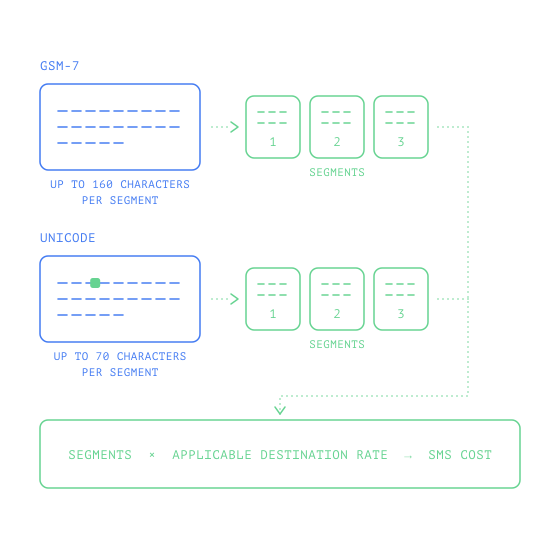
Outbound SMS is priced by destination and billed in message segments. Your applicable rate can also depend on the traffic, sender setup, volume and available route.

A standard GSM-7 message contains up to 160 characters in a single segment. Unicode messages contain up to 70 characters. Longer messages can use multiple billable segments.

View SMS rates →

SMS pricing depends on where you send

SMS API FAQ

What is an SMS API?

An SMS API lets software send and work with text messages programmatically.

The didlogic REST API provides endpoints for sending SMS, listing messages sent from your account and retrieving details about an individual message.

What can I do with the didlogic SMS API?

You can submit outbound SMS, retrieve a paginated list of sent messages and request details for an individual message.

For inbound SMS, supported SMS-enabled numbers can relay incoming messages to your endpoint through webhooks.

How is the API authenticated?

The documented SMS endpoints use Bearer token authentication.

Can I send bulk SMS through the API?

You can build high-volume sending through the API. Your application manages the recipient list and sending logic and submits messages to the didlogic API.

didlogic does not provide a portal-based campaign builder for uploading a contact database and launching a bulk campaign.

Can I check SMS delivery status?

The message-details endpoint returns the available delivery status and timestamps for an individual SMS. It also returns the source and destination, message content, cost and segment count.

Can I receive SMS?

Yes, with supported SMS-enabled numbers. Incoming SMS can be relayed to your endpoint through a configured webhook.

Can I use the API for OTP and transactional SMS?

OTP, verification and transactional messages are supported A2P use cases, subject to the requirements and available routes for the destination.

Learn more about A2P messaging →

How much does it cost to send SMS?

Pricing depends on the destination and the number of SMS segments sent. Traffic type, sender setup, volume and available route can also affect the applicable rate.

Get started

Connect SMS to your application