











PRICING

SMS rates by country

Per-message rates for A2P SMS on direct carrier routes. Outbound is priced by destination network, inbound is a fixed monthly rate per SMS-enabled number. Pick a country below for exact figures.
Trusted by
Messaging

Outbound SMS rates, by country

Per-message rates for every destination we deliver to. Pricing follows the destination network rather than a blended country average, so each operator is listed on its own line.

NameSMS rate
All networks
from$0.0103
Indicative rates. Your plan may differ.

How SMS billing works

Outbound, per message
Every message drawn from your prepaid balance at the destination network's rate. No monthly platform fee, no minimum spend on standard accounts.
Inbound, per number
Receiving costs a fixed monthly rate on each SMS-enabled DID. Inbound volume is not metered, so a busy two-way number costs the same as a quiet one.
One balance for voice and SMS
Messaging runs on the same account, the same prepaid balance, and the same invoice as your call rates . No separate messaging contract.


What counts as one message

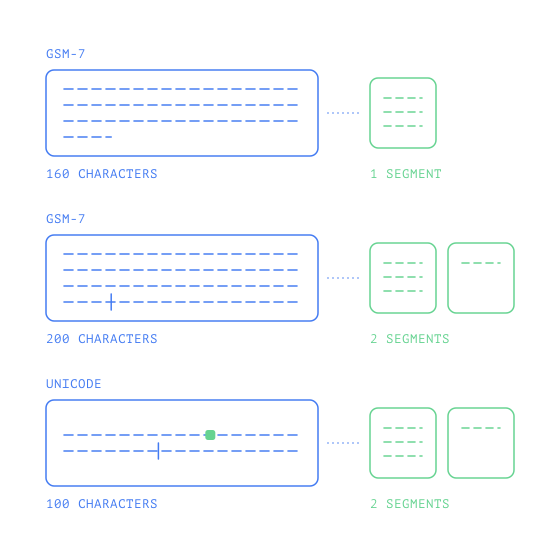
Carriers bill SMS in segments, not in messages. A message using the standard GSM-7 alphabet fits 160 characters in one segment. Add an emoji or a non-Latin character and the message switches to UCS-2 encoding, which fits 70 characters per segment. Longer messages are split and concatenated, and each segment is billed at the destination rate.

A 200-character plain-text message is billed as two segments. A 100-character message containing one emoji is also billed as two. The rates in the table above are per segment, which is how mobile operators price them.
What counts as one message

What comes with the rates

REST API and portal
Send with a POST request or from the client portal. Same message management either way, no separate messaging console to learn.
Inbound over webhook
Inbound messages arrive at your relay URL with sender number, destination DID, message body, timestamp, and carrier metadata, ready to drop into a CRM or verification flow.
Sender ID options
Send from your SMS-enabled DID or from a registered alphanumeric sender ID where local carrier rules permit it. We advise on what is allowed per market.
Message history and delivery status
Every outbound message logged in the portal with delivery status, timestamp, and destination, available for QA and reconciliation.

Direct carrier routes, not aggregator hops

Published SMS rate cards look much the same across providers. What differs is the path a message takes after it leaves your account. didlogic delivers A2P traffic over direct carrier interconnections rather than public aggregators, on an Autonomous System we have run ourselves since 2006, with 12 Points of Presence worldwide.

Fewer hops means less message rewriting, fewer filtering surprises, and carrier error codes that come back readable instead of collapsed into a generic failure. For OTP and transaction traffic, that predictability is worth more than a fraction of a cent per message.

Our network →
Direct carrier routes, not aggregator hops

SMS pricing FAQ

How much does it cost to send an SMS?

It depends on the destination network and the number of segments in the message. Rates are per segment and per operator, so a message to a mobile network in one country can cost several times what the same message costs in another. Select a country in the table above for exact per-message figures.

Why do SMS rates differ between operators in the same country?

Each mobile operator charges its own termination fee for delivering A2P traffic, and those fees are set independently. Pricing each network separately keeps low-cost destinations genuinely low instead of averaging them up into a single country rate.

Is SMS billed per message or per segment?

Per segment. One segment holds 160 characters of GSM-7 text or 70 characters when the message contains emoji or non-Latin characters. Longer messages are split into multiple segments and each is billed at the destination rate.

What does inbound SMS cost?

Inbound is a fixed monthly rate on each SMS-enabled DID, with no per-message charge on messages you receive. Outbound is the only usage-metered part of messaging.

Is there a platform fee or a monthly minimum?

No. There is no messaging platform fee, no infrastructure surcharge, and no queuing premium. You pay the per-message rate for outbound and the monthly rate on each SMS-enabled number.

Do I need a separate account for SMS?

No. SMS runs on your existing didlogic account, prepaid balance, and portal. Enable it on any eligible DID and start sending. Setup steps are in the SMS gateway guide.

Are these the final rates I will pay?

The table shows indicative rates for standard accounts. Your plan, volume, and destination mix can change the figures, which is why the footnote says your plan may differ. For committed volumes, request pricing and we will quote your destination mix directly.

Is this A2P or P2P SMS?

A2P. The rates cover application-to-person traffic: one-time passcodes, transaction alerts, appointment reminders, account notifications, and marketing campaigns sent from software rather than from a handset.

Does the price change if I use an alphanumeric sender ID?

The per-message rate is the same. What changes is eligibility: some countries require sender ID pre-registration, and a few prohibit alphanumeric senders entirely, in which case the message is delivered from a long code instead. We flag the requirements per market before you launch.

How do these rates compare to CPaaS providers?

CPaaS pricing usually includes a margin for the aggregator layer between the platform and the carrier. didlogic peers with carriers directly and prices the route itself, so what you see in the table is the route rate rather than a route rate plus a platform markup.

Where do I find call rates?

Voice is priced separately per minute and per destination on the call rates page. Both services bill from the same balance.