
AI voice agent use cases and applications
What teams build with AI voice on didlogic

Medical practices, law firms, and home services running 24/7 inbound on a local number. didlogic provides G.722 wideband audio for STT accuracy, RFC 2833 DTMF passthrough for menu keypresses, and regional PoPs that keep the media path short on cellular calls.

AI sales teams and BPOs running hundreds-to-thousands of outbound calls per day. CLI rotation across your DID pool keeps pickup rates healthy, domestic origination in 130+ countries prevents foreign-caller flagging, and free CPS bursting on AI-native accounts handles campaign launch spikes.

Healthcare scheduling, sales nurture, customer success renewals. didlogic supports dedicated callback numbers (so recipients can call back hours later), voice and SMS on the same DID where regulators permit, and the API surface to fire reminders programmatically from your CRM.

Lending, BNPL, utilities, and fintech running compliance-sensitive outbound. Regional data processing keeps call routing and CDR storage within jurisdiction. In-country origination IPs preserve domestic-caller status. Our compliance team tracks TCPA, FDCPA, and regional equivalents per market.

Support, sales, and triage flows where AI handles routine cases and escalates the rest. Native SIP REFER (RFC 3515) moves the call to a human without dropping it. Custom SIP headers carry conversation context. Both blind and attended transfer modes supported.

Mid-market and enterprise contact centres replacing legacy IVR menus with conversational AI as the first-line router. Full SIP method support handles multi-leg call control reliably, multi-trunk failover catches outages, and sub-20ms media latency keeps the routing decision responsive.

SaaS, ecommerce, and fintech operating across markets on a single AI model. Licensed local voice in 17 countries unlocks regulated markets, domestic PSTN handover prevents foreign-call flagging, and 12 physical PoPs keep APAC and LATAM paths regional instead of routing through US gateways.

Technical teams building on LangChain, Pipecat, LiveKit OSS, Vocode, or custom stacks. Standard RFC 3261-compliant SIP works with any stack that speaks the protocol. Digest and IP authentication both supported. REST API and MCP server handle programmatic provisioning end-to-end.
| Capability | What didlogic provides | Impact on AI voice |
|---|---|---|
| Latency | Under 20ms audio latency on 80% of calls. Distributed gateways across 12 PoPs keep most voice paths regional. | Conversations stay within the natural-speech response window. No awkward silences. |
| Audio quality | G.722 HD codec support | Higher STT accuracy and clearer TTS playback |
| Scale | Flexible CPS and concurrent channels, raised at no extra cost for AI accounts | Capacity grows with traffic, no tier upgrade |
| Call transfer | Native SIP REFER | AI transfers to human agents without session drop |
| Setup | Platform-specific guides and engineering assistance | Faster time to first test call |
| Network | Own Autonomous System (AS13006), 12 physical PoPs | No middlemen between your audio and the carrier |
How AI voice agents connect to the phone network
Why the carrier layer matters more in AI voice than it did in human calling
1.5-second response times used to feel fast. Now sub-500ms is the working target and sub-200ms is the ambition. The model and TTS layers eat most of the budget, leaving the carrier with tens of milliseconds rather than hundreds.
Narrowband audio used to be a UX question. Now it’s a transcription-accuracy question. G.722 wideband versus G.711 narrowband moves STT accuracy by five to ten percentage points, and that gap compounds across every turn of a conversation.
BYOC was a beta feature on most platforms twelve months ago. Today most platforms all ship standard SIP as a first-class integration path. The lock-in that used to come with a CPaaS bundle disappeared, and carriers compete on the layer they actually own.
Answer rates used to be a sales-script problem. Now they’re a CLI, routing, and origination problem. Local CLI versus foreign IP, rotation across a number pool, in-country origination: every lever for outbound pickup rates lives at the carrier, not the platform.
A native MCP server for your voice stack
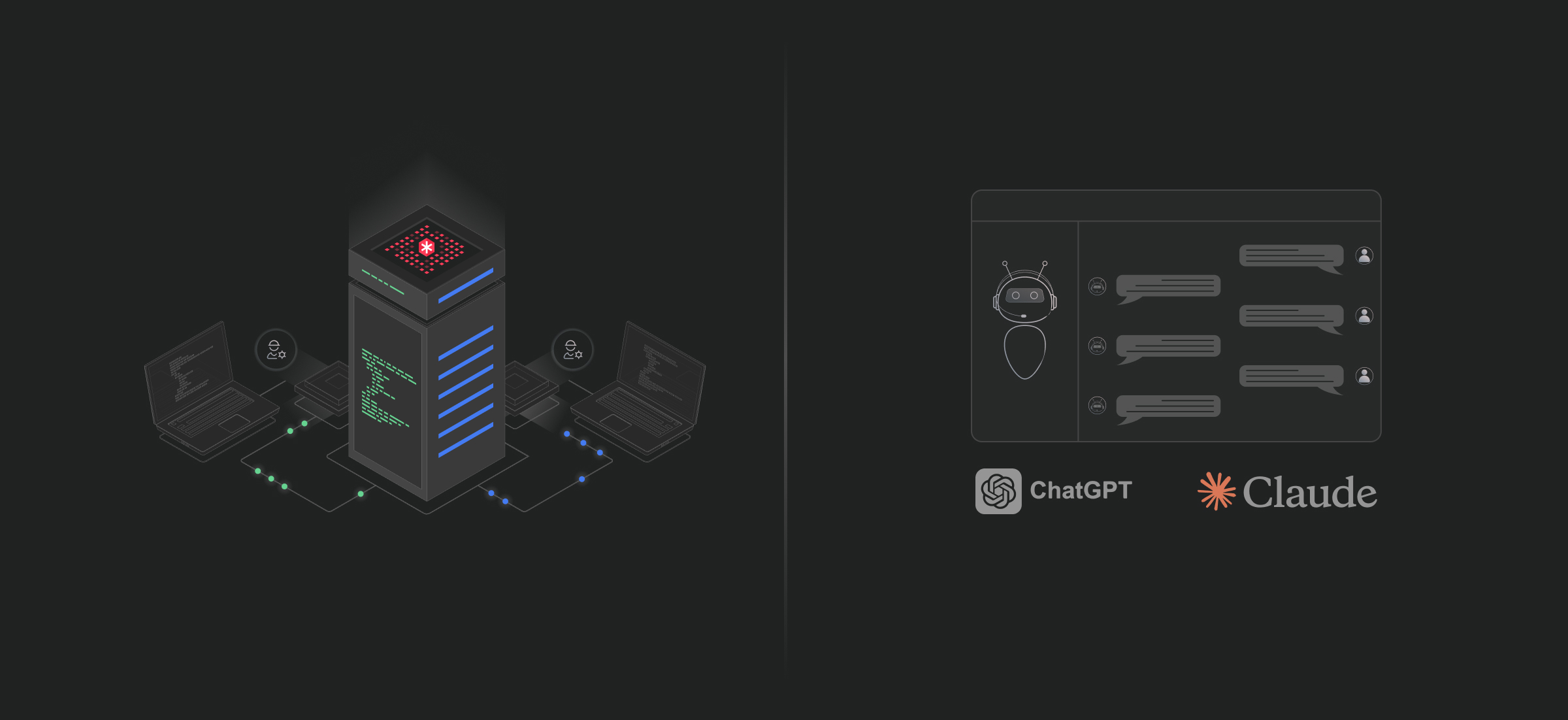
Integrate didlogic directly into Claude Code, Cursor, and other MCP-compatible AI development environments. Developers can provision phone numbers, manage SIP infrastructure, retrieve call records, and automate telecom workflows through natural-language prompts inside the tools they already use. Built with MCP compatibility in mind, didlogic makes telephony infrastructure accessible to AI agents, coding assistants, and automation systems without relying on manual dashboards, fragmented APIs, or repetitive operational work.
Pay for what you use. No channel fees.