












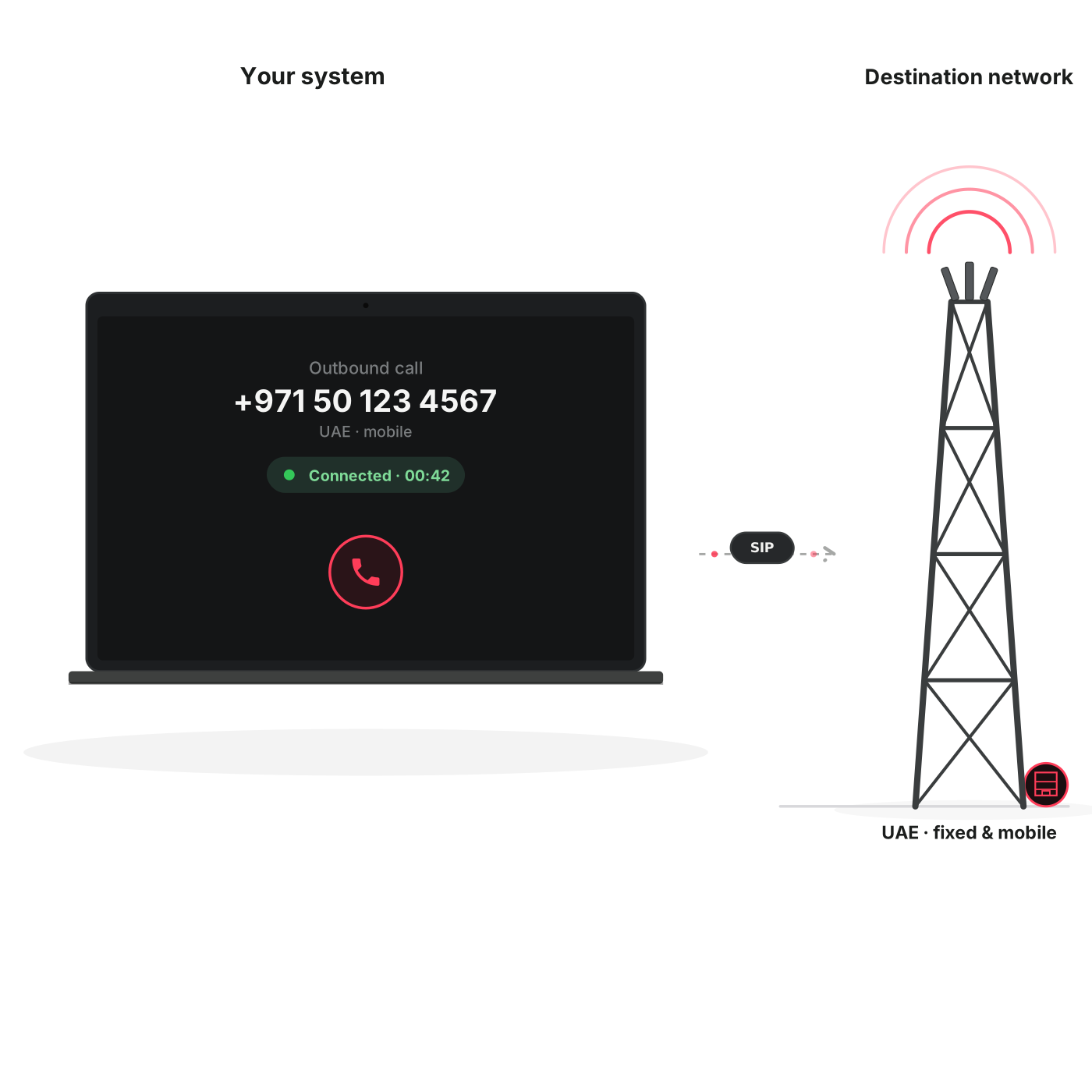
Global SIP trunking service with direct carrier routes
What you get with didlogic SIP trunking
Voice that stays on our network from start to finish
didlogic runs its own Autonomous System, AS13006, with owned hardware in 12 carrier-dense data centers across APAC, Europe, Oceania, Africa, and South America. We buy IP transit directly from Tier 1 carriers and peer at major Internet Exchanges. Local traffic stays local. Regional traffic stays regional.
That is how we hold sub-20ms audio latency on 80% of calls. The remaining 20% are long-haul or cross-region paths where physics and carrier geography take over.
See the network →
From signup to your first test call
Built for teams running real voice traffic
Explore AI Voice →
Pay for traffic, not for trunks
CLI Rotation for outbound performance
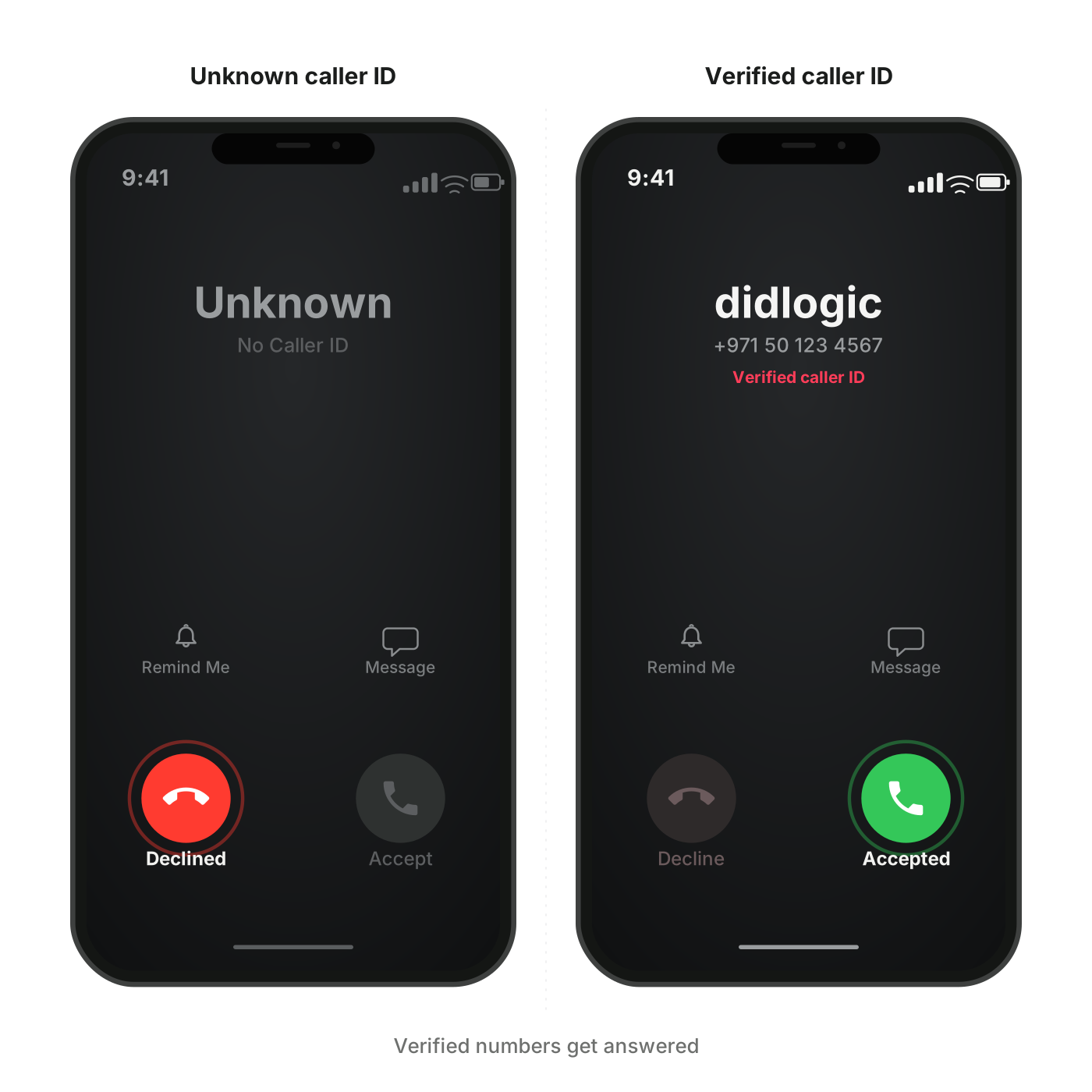
CLI Rotation lets you manage a pool of caller IDs directly from your didlogic account. Outbound calls cycle through the pool automatically, which spreads traffic across multiple numbers, keeps each one under spam-detection thresholds, and pushes answer rates back up.
The feature is self-service. Add numbers, remove numbers, and update the rotation logic from the portal. Changes apply instantly, with no ticket and no engineering involvement on our side.
Reliable, compliant voice infrastructure with real engineering support
• ISO 27001 and ISO 9001 certified
Information security and quality management independently certified by TÜV AUSTRIA, covering the systems that carry your traffic and store your CDR and DID data. See security and compliance.
• Regional data processing
Voice traffic runs through our own regional data centers. Call handling stays on domestic infrastructure where local data laws require it.
• Licensed local voice in 17 countries
In regulated markets, we provision DIDs on local licenses. Outbound calls originate from in-country IPs with compliant caller IDs, so they arrive as domestic traffic rather than being blocked as foreign.
• Encrypted signalling and media
TLS for signalling, SRTP for media across inbound DIDs and outbound trunks.
• E911 and E112 in 46 countries
Emergency routing where required, with address provisioning built into the portal.
• Real engineering support, during migration and after
Reach our engineering team directly during migration, integration, and escalations. We also respond in platform communities like Vapi Discord when customers need help in public.
Our team has been running voice infrastructure for 20 years, and regional engineers track regulatory and carrier changes in every market we serve.
| Spec | didlogic SIP trunking |
|---|---|
| Protocol | SIP over UDP, TCP, and TLS |
| Media | RTP, with SRTP for encrypted media |
| Codecs | G.722 (HD voice), G.711, and common narrowband codecs |
| Coverage | Local and toll-free numbers in 130+ countries |
| Latency | Sub-20ms audio on 80% of calls |
| Network | own ASN (AS13006), 12 physical PoPs, direct Tier 1 peering (PCCW, GTT, Telia, NTT) |
| Capacity | No per-channel or per-trunk fees. Concurrent channels and CPS raised on request |
| Outbound | CLI rotation, AMD (answering machine detection), high-ASR routing |
| Call control | SIP REFER for live transfer to a human agent or another endpoint |
| Compliance | Licensed local voice in 17 markets, E911/E112 in 46 countries, regional data processing |
FAQ: SIP Trunking
What makes didlogic SIP trunking different from a typical SIP provider?
Most SIP providers resell capacity they do not own. didlogic runs its own network: our Autonomous System (AS13006), 12 physical PoPs, and direct Tier 1 peering. Traffic stays on our infrastructure end to end, which keeps latency low and gives us direct control when something needs fixing. Pricing has no per-channel and no per-trunk fees.
Is didlogic a good fit for AI voice agents?
Yes. didlogic is a strong fit for AI voice teams that need local numbers, low-latency routing, HD audio, and SIP handoff to human agents. If your main use case is conversational AI, outbound AI calling, or voice bots connected to real phone networks, the AI Voice page gives a fuller picture of how the platform supports that workflow.
Can I use didlogic SIP trunking with local DID numbers?
Yes. SIP trunking and DID coverage work together, so businesses can connect voice infrastructure and provision local numbers through one provider. If you want to explore number availability and country coverage in more detail, see Local DID Numbers.
Does didlogic charge per channel or per SIP trunk?
No. didlogic does not charge per channel or per trunk, which makes the pricing model easier to work with for businesses that need flexible capacity or expect traffic volumes to change over time.
How quickly can I start testing didlogic SIP trunking?
In many cases, you can create an account, get a test DID, add credit, and start placing calls the same day. That makes it easy to validate routing quality, setup compatibility, and call performance before scaling further.
Which PBXs, softphones, and platforms are compatible with didlogic SIP trunking?
didlogic works with standard SIP endpoints, including Asterisk, FreeSWITCH, 3CX, Cisco, and common softphones, plus AI voice platforms like Vapi, Retell, ElevenLabs, and LiveKit. If your system speaks standard SIP, it connects, so you do not need to rebuild your stack. Setup guides are published in the didlogic docs.
Is didlogic suitable for outbound dialers and telemarketing?
Yes. didlogic supports outbound use cases where answer rates, caller ID management, and route reliability matter. Features like CLI rotation and destination-specific routing make it relevant for dialer-heavy teams that need more than a basic SIP provider.
How does didlogic handle voice quality and latency?
Short routing paths and direct carrier peering. Local traffic stays local and regional traffic stays regional, so audio holds under 20ms added latency on 80% of calls, measured across our 12 PoPs. G.722 HD voice is supported for higher fidelity and better speech-to-text accuracy on AI calls.
Is didlogic a Twilio alternative for SIP trunking and AI voice?
For teams focused on voice infrastructure, yes. didlogic suits buyers who want SIP trunking, DID numbers, and direct telecom connectivity without paying for a broader communications layer they do not need. For a side-by-side view, see our Twilio alternative for AI voice page.
Does didlogic support compliance and security requirements?
Yes. didlogic is ISO/IEC 27001:2022 and EN ISO 9001:2015 certified by TÜV AUSTRIA, with TLS signaling, SRTP media, regional data processing, and licensed local voice in 17 regulated markets. See security and compliance for certificates you can verify independently.
Can didlogic help with migration and onboarding?
Yes. didlogic supports onboarding, migration, and engineering-led setup help, which is useful for businesses moving from another carrier or adding a second voice provider for testing and redundancy. If you want to speak with the team directly, use the contact page.
Who should contact didlogic about SIP trunking?
didlogic SIP trunking is relevant for AI voice teams, contact centers, outbound sales operations, telecom platforms, and businesses expanding voice coverage across multiple countries. If your setup is more complex than a standard self-serve flow, it makes sense to contact the team and discuss the use case directly.
How much does didlogic SIP trunking cost?
There are no per-channel or per-trunk fees. You pay for the traffic you send, with pay-as-you-go rates that vary by destination. See current SIP trunk call rates by country: /pricing/wholesale-international-voice/call-rates/
Free test DID, trial credits, and access to our engineering team after account review. No contract and no channel fees.