




 by Vram Bastadjian | December 22, 2025
Why AI Voice Fails Without Top-Tier Telecom Infrastructure
AI voice agents are having a moment. Large language models are more capable; speech synthesis more natural. Conversational AI is finally usable in real customer-facing scenarios.
But there is a hard truth many teams discover too late.
You can improve the model indefinitely. Without the right infrastructure underneath it, AI voice will never scale into a reliable tool for your team.
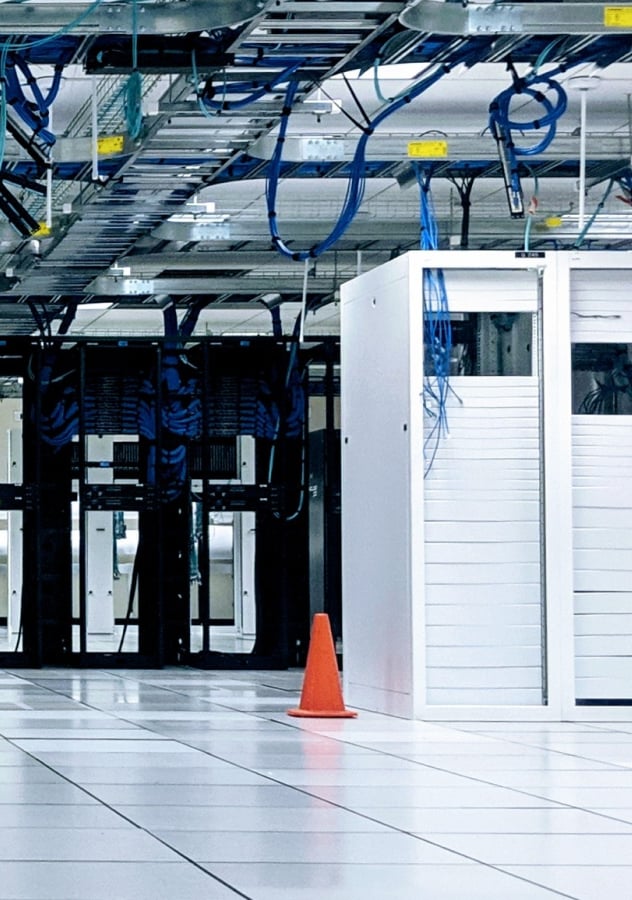
Indeed, behind every successful AI-powered phone call is something far less glamorous but far more critical: reliable, global, carrier-grade telecom infrastructure. Lacking that foundation, even the best AI voice agent fails the moment it leaves a demo environment and enters the real world.
This is the problem didlogic’s Bring Your Own Bots initiative was built to solve.
The Missing Layer in the AI Voice Stack
Most teams building AI voice agents focus on the top of the stack:
- Language models
- Conversational logic
- Voice synthesis
- Prompting and orchestration
Those layers matter, but agents also need to be able to reliably answer real phone calls, with clear audio, low latency, and local phone numbers customers trust.
This is where many AI projects stall.
Engineering teams quickly discover that deploying AI voice in the real world means inheriting a layer of complexity they did not plan for. Instead of refining conversational logic, they are pulled into SIP configuration, regional voice quality issues, and vendor-specific constraints that slow iteration.
What should have been a fast path to production often turns into months of infrastructure work before a single call ever goes live.
Why Telco Quality Directly Impacts AI Performance
In AI voice, telecom quality is not a backend concern. It directly affects outcomes.
Latency disrupts conversational flow.
Packet loss confuses speech recognition.
Audio artifacts reduce transcription accuracy.
Poor routing increases dropped calls.
From the customer’s perspective, none of this is “a telecom issue.”
They blame the AI.
This is why scaling AI voice requires carrier-grade infrastructure from day one, not patched-together API-driven voice platforms or regional workarounds.
Didlogic brings over 15 years of experience operating global voice networks, with direct tier-1 carrier connections and more than 100 million call minutes handled every month. That experience is now applied to AI voice at scale.
BYOB: Decoupling Intelligence from Infrastructure
Bring Your Own Bots is a simple idea with major implications.
Didlogic handles the hardest part of AI voice deployment:
the phone numbers, routing, quality, scale, and global reach.
You handle the intelligence.
With BYOB, businesses can connect AI voice agents from vendors like Vapi, ElevenLabs, LiveKit, Retell, n8n, among others, to didlogic numbers across more than 130 countries, in minutes, without rebuilding telecom infrastructure every time the AI stack changes.
This matters because AI is evolving too fast for lock-in.
The best model today may not be the best model next quarter. BYOB ensures your phone numbers, customer access, and infrastructure remain stable while your AI evolves freely.
Learn more about the BYOB initiative here.
AI Voice Needs Global Reach That Feels Local
Above all, scaling AI voice is about trust.
Customers are far more likely to answer and engage with a local or toll-free number they recognize, especially when the voice on the other end is powered by AI. Global deployments that rely on a handful of regions or shared numbers undermine adoption before the AI ever speaks.
Didlogic provides:
- Local DIDs in 120+ countries
- Toll-free numbers in 113 markets
- Consistent voice quality across regions
- One platform, one contract, one bill
- High-quality, plug-and-play telco infrastructure
This allows AI voice agents to scale globally while feeling local everywhere.
For regions like Europe and the GCC, this is especially critical. Data sovereignty, regulatory compliance, and cultural expectations all depend on infrastructure choices, not just AI behavior.
From Prototype to Production in Minutes
One of the strongest signals that infrastructure is the real bottleneck in AI voice is time to production.
Many teams report three to six months of work to connect an AI agent to real phone calls at scale.
With didlogic BYOB, that timeline collapses.
For example, connecting a didlogic number to ElevenLabs Conversational AI via SIP trunking takes minutes, not months. No custom telecom development is required.
You can see a full step-by-step setup guide here.
This speed matters. In AI, time to market is often more valuable than feature completeness. Infrastructure should never be the reason innovation slows down.
Real Use Cases, Real Scale
Once infrastructure stops being a constraint, AI voice becomes practical across industries.
Support teams can offload tier-one requests and routine questions, sales organizations can qualify leads and schedule meetings around the clock, and travel or hospitality providers can manage reservations across time zones.
Even regulated sectors like fintech can use AI voice for verification and account support, provided the underlying voice infrastructure is built for compliance and reliability.
In each case, the phone number becomes the interface, not a call center seat.
A deeper look at these use cases is available in our recently published article.
Infrastructure Is the Differentiator That Lasts
AI models will continue to improve. Voices will become more human. Conversations will become more nuanced.
What will not change is the need for:
- Reliable phone networks
- Low-latency routing
- Global number availability
- Compliance-ready infrastructure
- The freedom to change AI vendors without disruption
This is where telecom expertise becomes a genuine strategic advantage.
Didlogic is not an AI company trying to learn telecom.
It is a telecom company applying proven infrastructure to the AI era.
The Future of AI Voice Is Built on Stable Foundations
AI voice will define how businesses communicate at scale. But the winners will not be those with the flashiest demos. They will be the ones who can deploy, operate, and scale reliably in the real world.
That requires infrastructure-first thinking.
Bring your own bots.
Bring your own models.
Bring your own ideas.
Didlogic will handle the phone network.
Explore BYOB and start building AI voice that actually scales.